Styles
What I work in, and what each one means once it is on skin.
Fine line
Single needle detail, kept light enough to age well.
Fine line work uses a single needle or a tiny grouping to build delicate, detailed designs: florals, portraits, lettering and little details that reward a closer look. The honest part is that fine line has to be designed to last, so I keep enough weight in the lines and enough space between them for your tattoo to age well rather than blur.
Black & grey
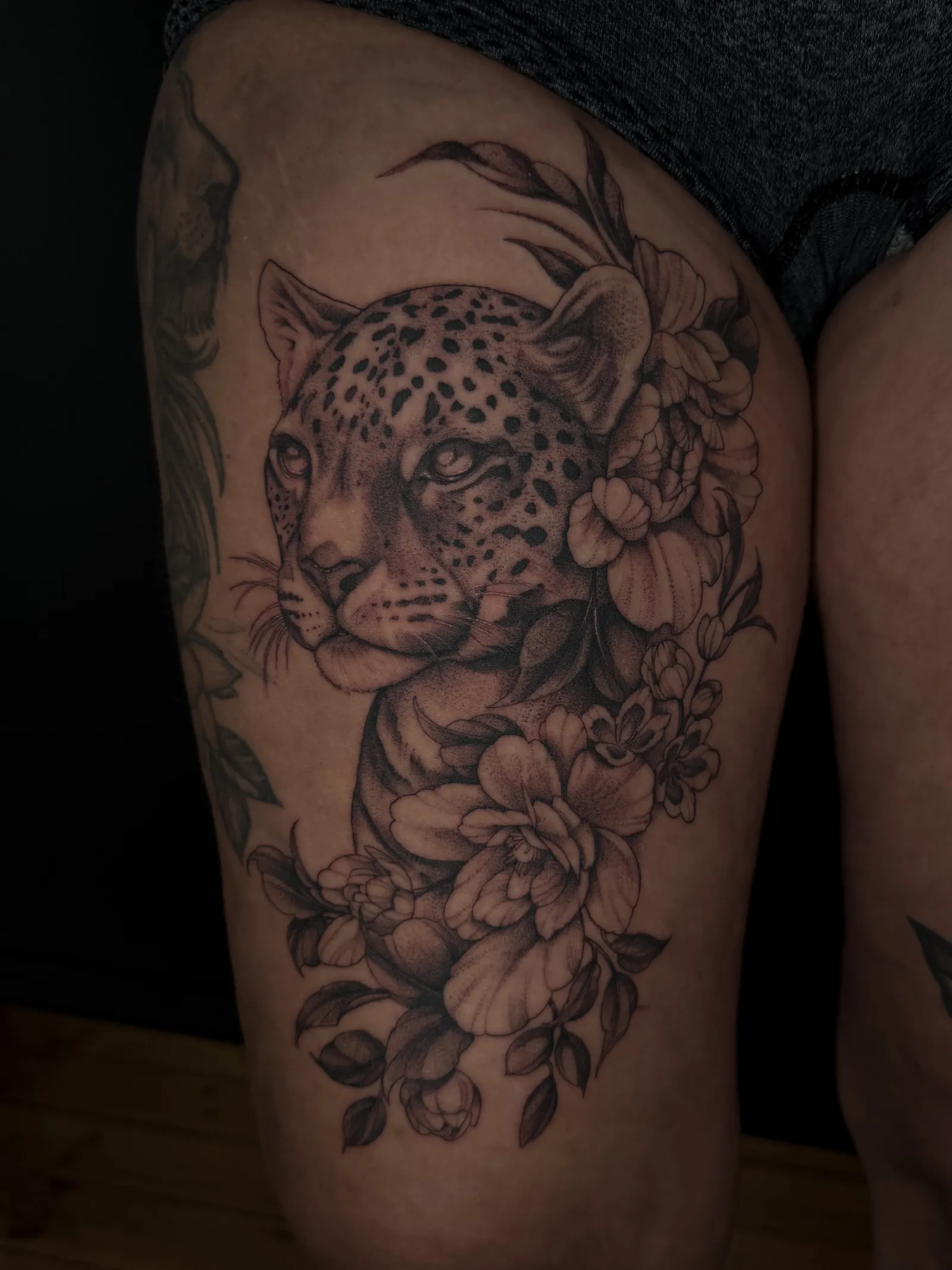
A mixture of realism, illustrative and smooth shading
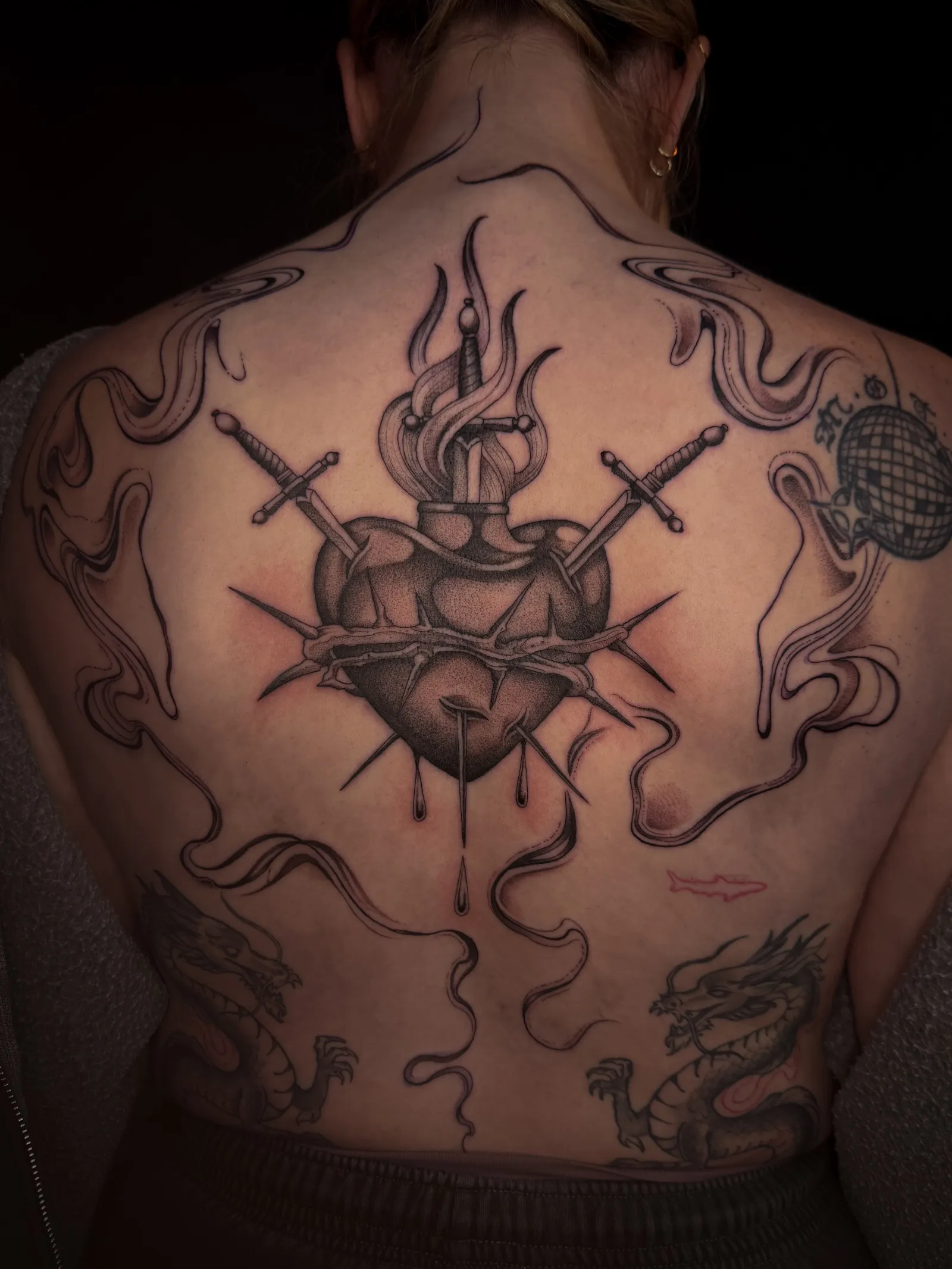
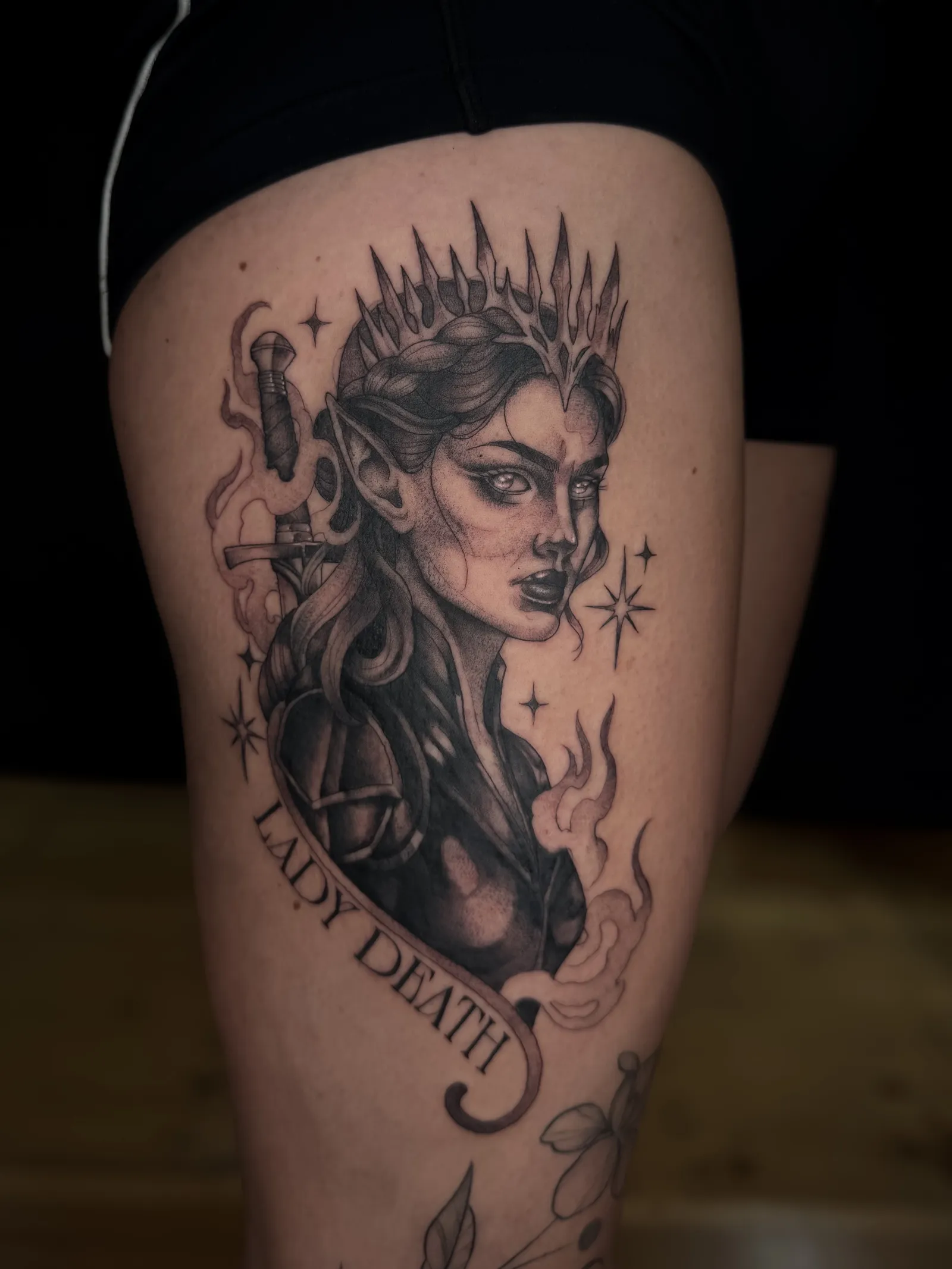
Black and grey builds depth with black ink diluted to soft greys, no colour needed. It suits realism, illustrative pieces and anything that wants smooth shading, from portraits and animals to sacred hearts and skulls, and it tends to age gracefully because contrast does the work.
Ornamental
Pattern that follows the body rather than sitting on top of it.
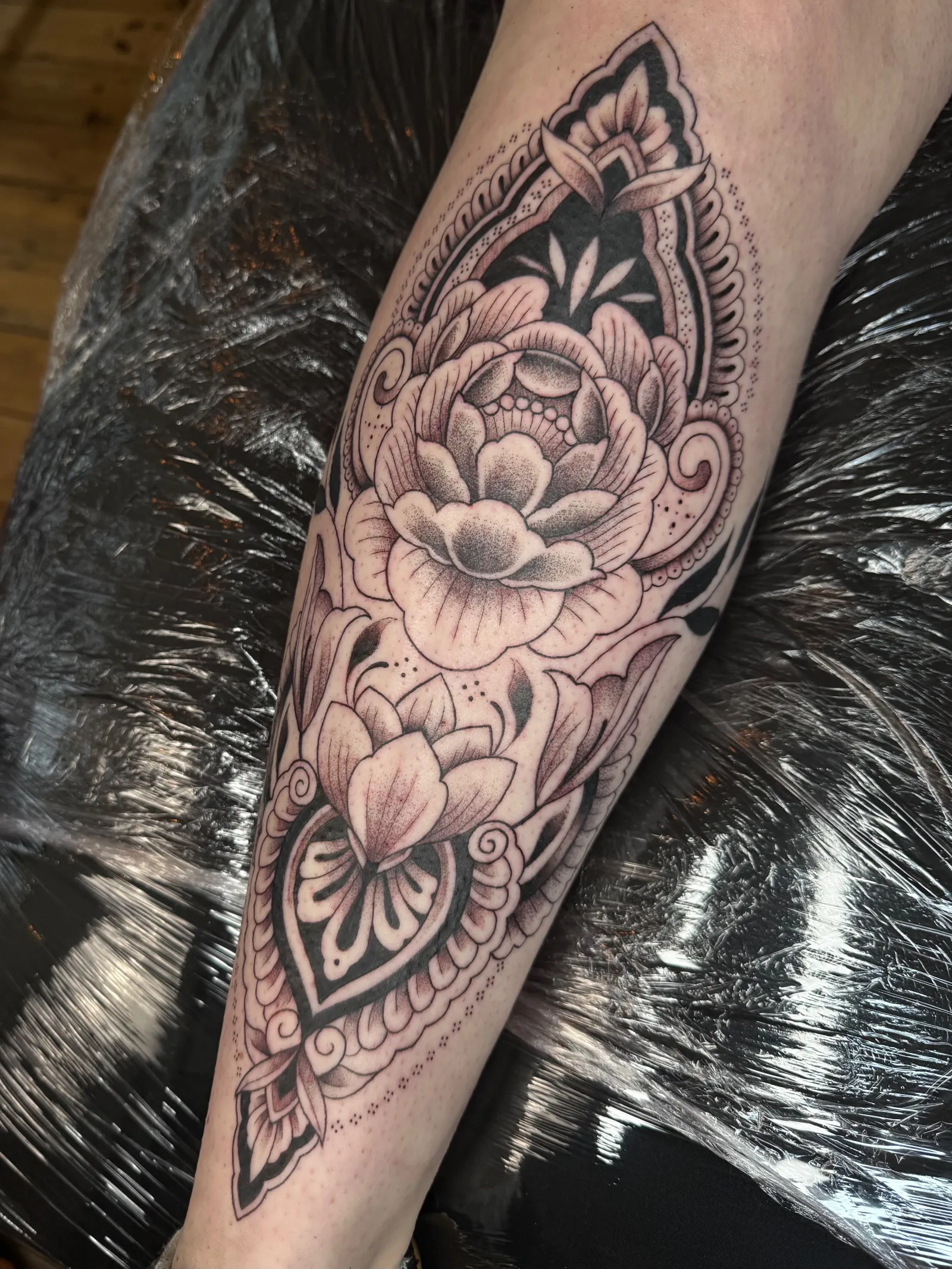
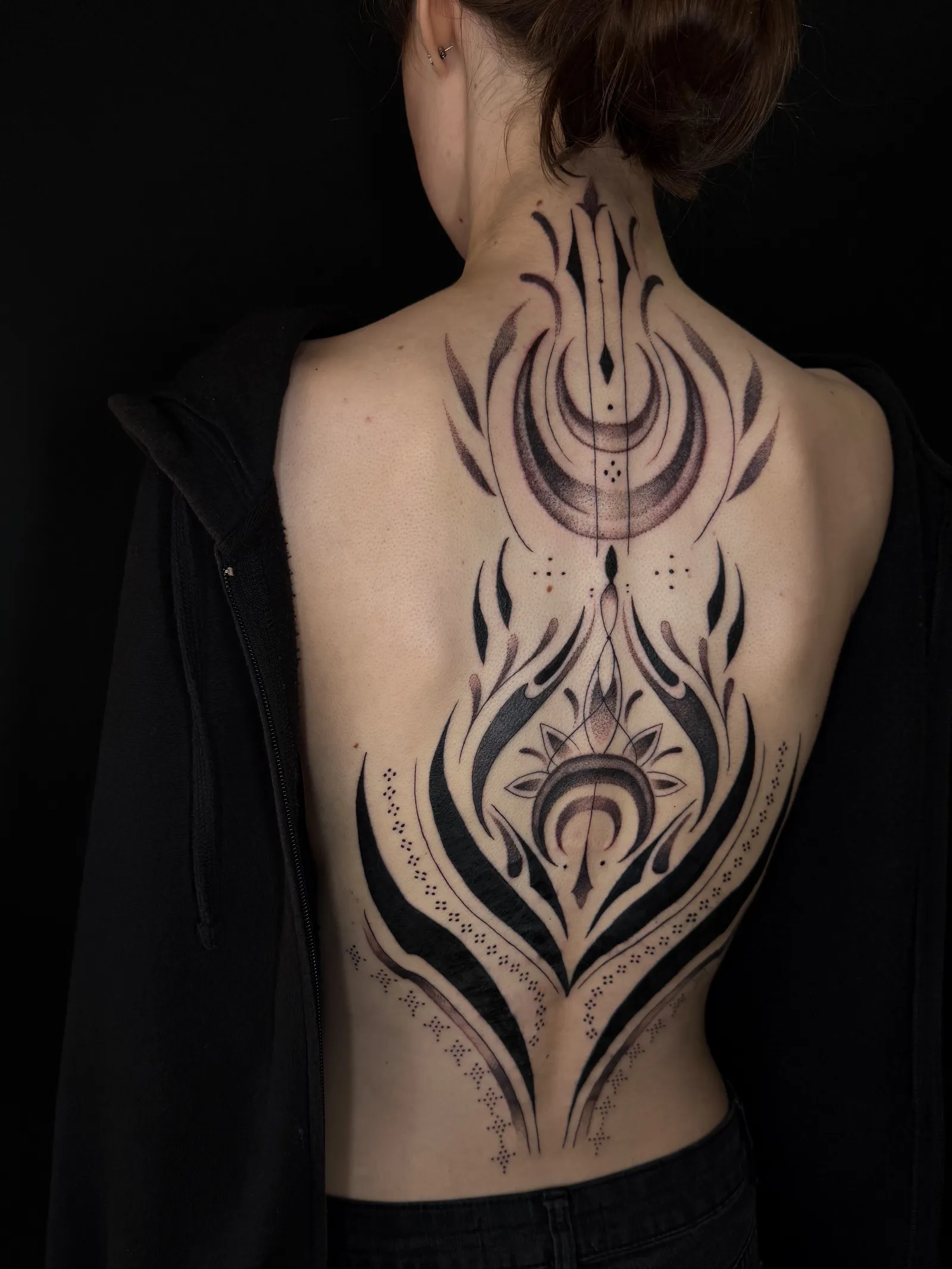
Ornamental work is built around the shape it sits on: a sternum, a spine, the curve of a shoulder. Mandalas, filigree and jewellery-like patterns that follow the line of the body.
Blackwork
Bold, solid black with plenty of contrast.
Blackwork is bold, solid black: heavy fills, strong shapes and plenty of contrast between ink and skin. It reads clearly from across a room, holds its shape for years, and looks just as good on its own as it does paired with finer ornamental detail.
Neo-traditional
Bold outlines, illustrative shapes, a nod to the old flash.
Heavier linework and illustrative shapes, with the readability of traditional flash but more room for detail.
Colour
Bright, saturated colour, from soft florals to vivid peonies.
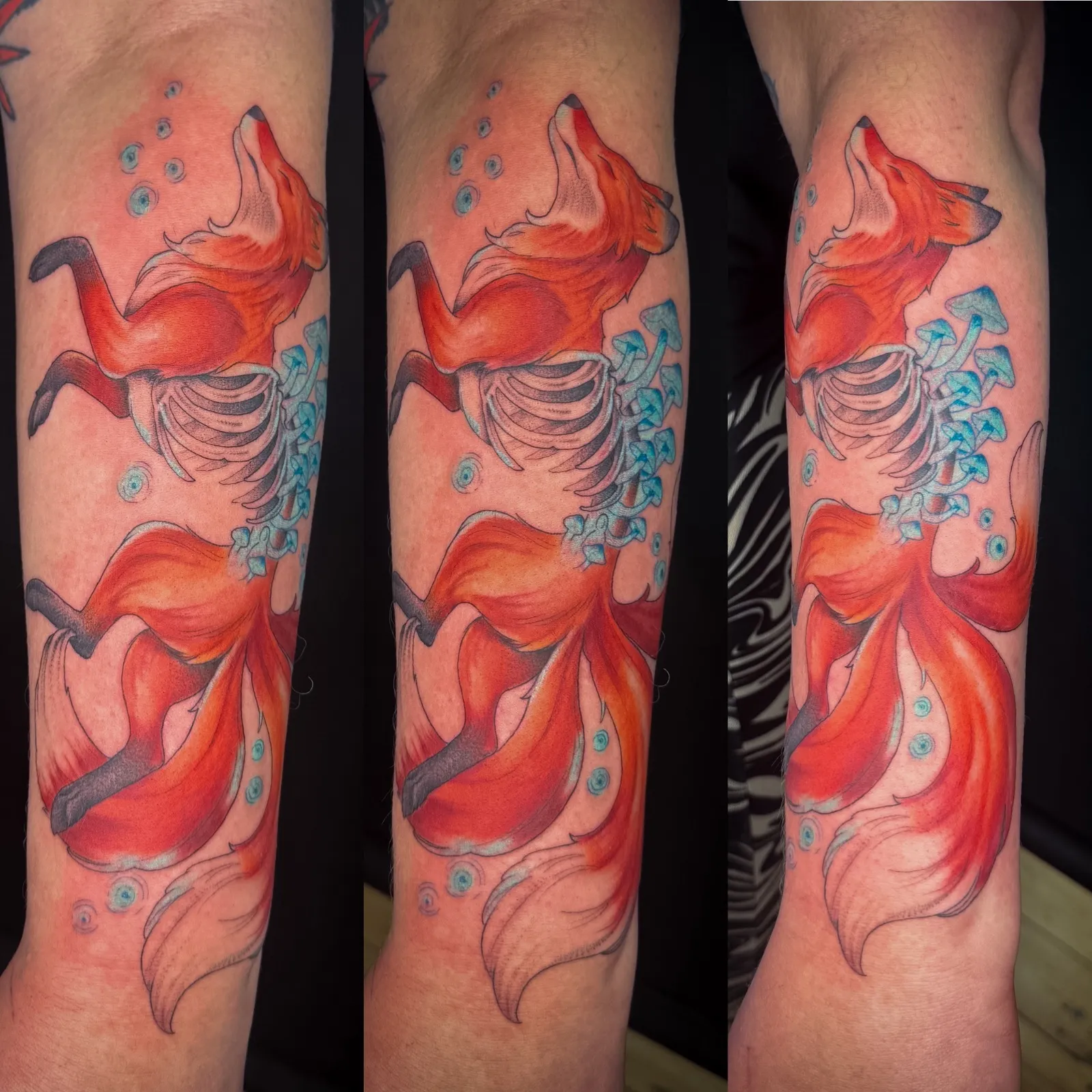
Colour work is all about saturation and blending, from soft florals to bold pieces like neo-Japanese peonies or a fox in full colour. We'll chat about the colours that will work best on your skin and how they settle as the tattoo heals.